Case study
Media intelligence and data analysis
Thousands of videos, one clear picture.
17,300
comments read in one run
72%
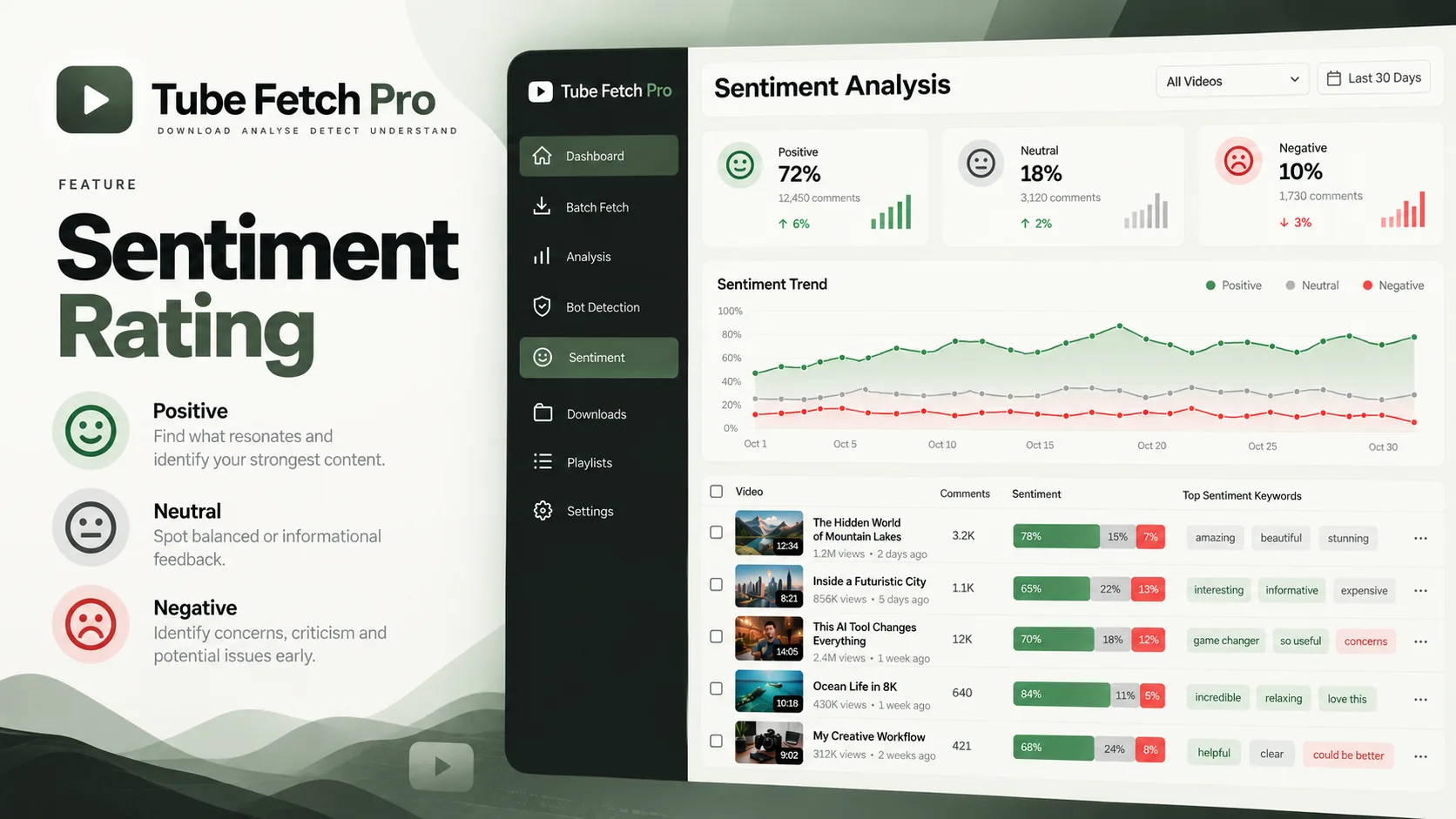
positive, 18% neutral, 10% negative
142
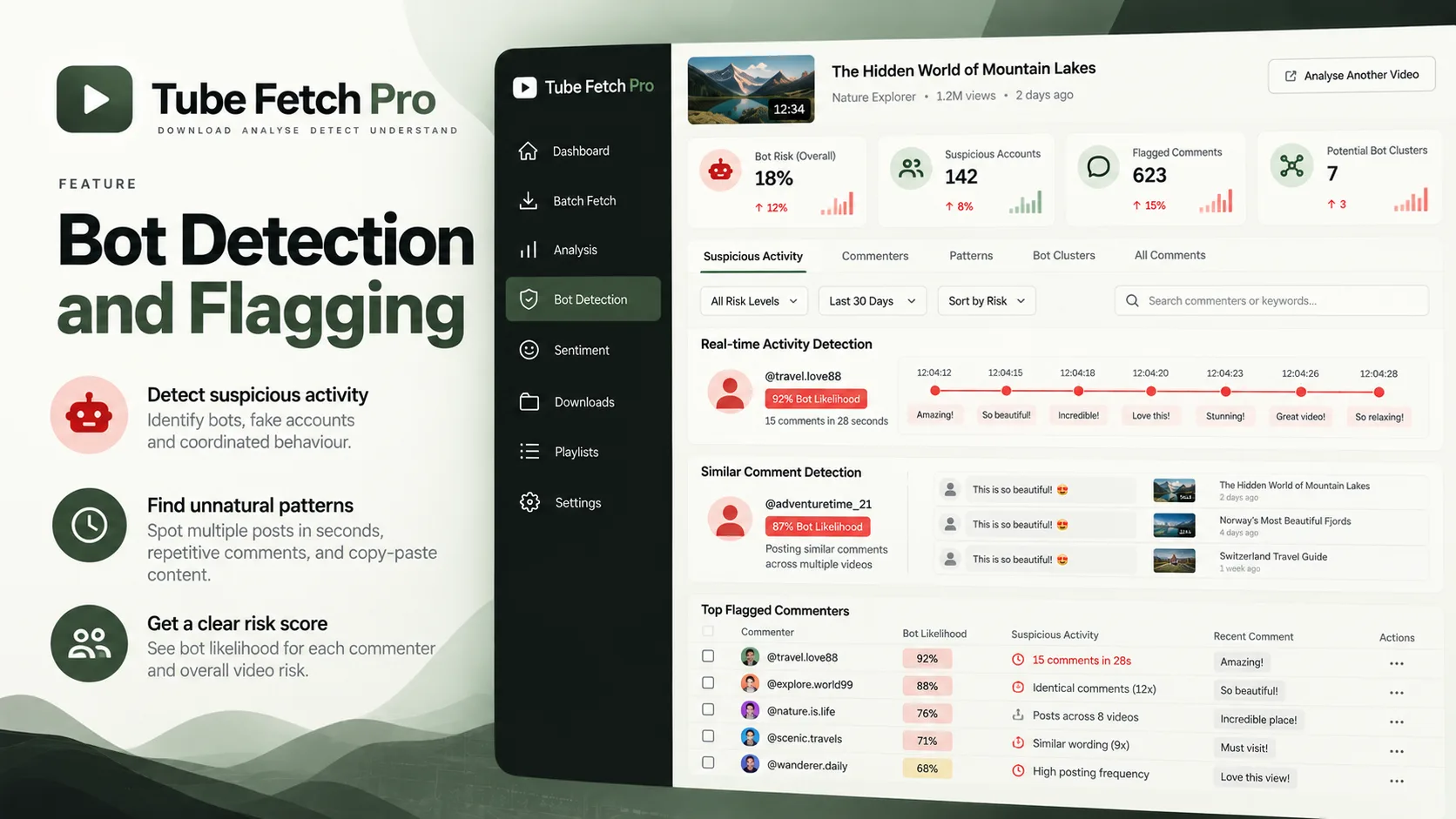
accounts flagged as suspicious
240
channel videos analysed in one pass
- Positive
- Neutral
- Negative
- All comments
- Flagged accounts
- Keyword A
- Keyword B
1 run
to collect every video and comment on a channel, replacing copy-and-paste into spreadsheets
4
media analysis objectives on one dataset: reporting patterns, bias, themes and narratives, and public opinion
The project
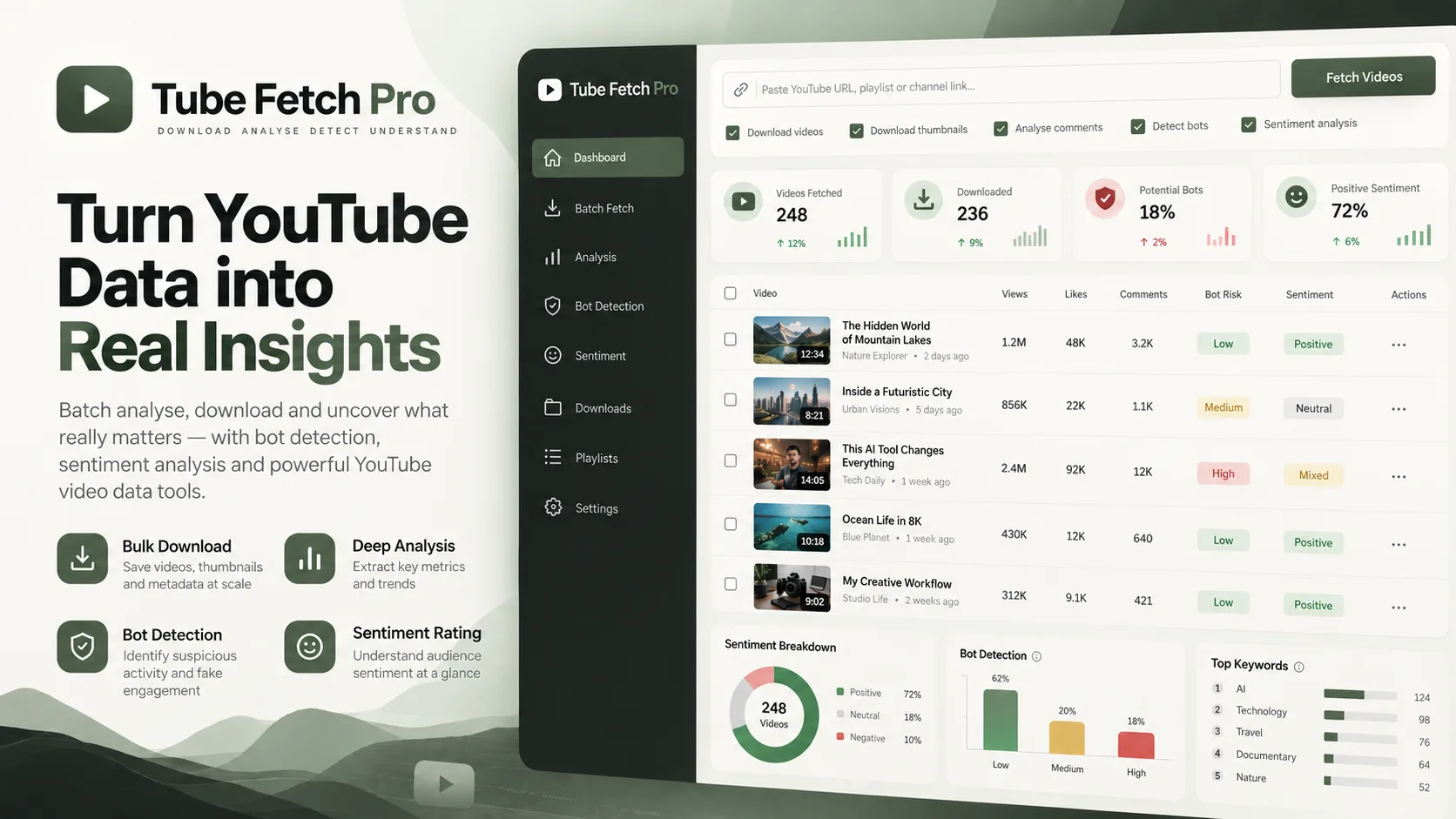
Adwa Labs built TubeFetch Pro to gather media reporting patterns and bias, trace the themes and narratives in coverage, and test whether public reaction is real or manufactured. It collects public YouTube channel data, scores sentiment, flags bot accounts and serves the results to our other tools through an API.
What we built
- Reporting patterns: what an outlet covers, how often and when, across a full channel
- Bias: sentiment and tone compared across videos, topics and time
- Themes and narratives: the stories and phrases that keep recurring in titles and comments
- Framing and public opinion: audience reaction tested for bot activity, so real and manufactured opinion can be told apart
The challenge
Media analysis on YouTube was manual, partial and open to manipulation
Studying how media outlets report, and how audiences respond, meant opening videos one at a time, copying comments into a spreadsheet and spotting patterns by eye. On a channel with hundreds of videos, where a single thread can run to thousands of replies, that covers a small slice of the conversation and takes hours before any analysis starts.
Volume was only half the problem. Repeated comments, spam and bursts of bot activity can make an opinion look far more common than it is, and a hand-picked sample gave us no way to check. Conclusions about bias, narratives or public opinion built on that sample were hard to defend.
The brief
Build one repeatable pipeline that answers four questions about media coverage: what is reported and how often, how it leans, which themes and narratives recur, and whether the public reaction is real or manufactured. Keep every classification inspectable, so the final judgement stays with the researcher.
The solution
One dataset, four lines of enquiry
TubeFetch Pro starts from public YouTube data. A researcher points it at a channel, or at a set of search terms, and it gathers every video and comment into a single dataset. The same collection then answers four questions about media coverage.
1. Reporting patterns: what gets covered, how often and when
Collecting a whole channel, not a handful of videos, shows what an outlet covers and how coverage changes over time. It can archive long-form video titles and comments, plus video, audio, subtitles and thumbnails when needed, so patterns are read across the full output.
2. Bias: how coverage and audiences lean
A Hugging Face sentiment model classifies each comment as positive, neutral or negative, and titles get a separate check for tone and clickbait. Researchers compare that mix by video, topic and period to see where coverage and response consistently tilt one way, then read the comments behind any percentage.
3. Themes and narratives: what keeps coming back
Recurring terms in titles and comments surface the stories and phrases that dominate. Keyword search runs several terms together, filters by date, sorts by relevance or popularity, and includes or excludes Shorts, so a narrative can be followed across channels as events unfold.
4. Framing and public opinion: real or manufactured?
Comparing how a topic is framed with how audiences react only means something if the reactions are genuine. The tool looks for posting bursts, repeated wording, generic comments and usernames made mostly of digits, and weighs them against signs of real engagement. Each account is classified as human, suspicious or bot, with a confidence level and the reasons attached, so researchers can separate organic opinion from amplified or manufactured opinion. Every flag can be inspected and overridden.
Built to plug into the rest of our stack
The collected data and analysis are exposed through a FastAPI backend, with the interface built in Astro and Node.js and Claude Opus supporting the analysis. Reports and automations in other Adwa Labs tools draw on the same run, so nobody copies results out of a dashboard by hand.
The outcome
From hours of copy-and-paste to evidence on all four objectives
Researchers now run one collection across an entire channel and read the results against each objective: what was reported, how it leaned, which narratives recurred and whether the public reaction was real. The output is a consistent set of figures and exports that a second person can inspect, reproduce and reuse, so the time goes on interpreting the data instead of gathering it.
Why media intelligence needs this
YouTube is where much of today’s news coverage is watched and argued over, which makes channel data a record of how reporting lands with audiences. Measured at scale and with the bots filtered out, that record supports defensible conclusions about media coverage and the public it reaches.
Human judgement stays in the loop
Classifications are leads, not verdicts. A researcher checks the underlying comments and account flags before anything goes into a report. TubeFetch Pro gives us a broader and more consistent view of public YouTube data; the interpretation remains our job.
What we would build for you
The same pattern applies beyond YouTube: collect public data at scale, add automated analysis, keep the reasoning visible and expose it through an API. It is the approach behind our AI Operations work for teams that still run research or reporting by hand.